When the drought returns

With all the flooding around, it’s easy to forget that droughts will be back.

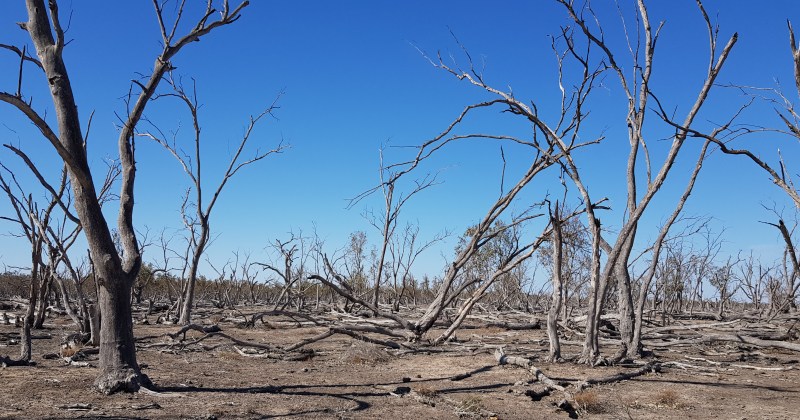
The last drought in the Wambuul-Macquarie was shocking.

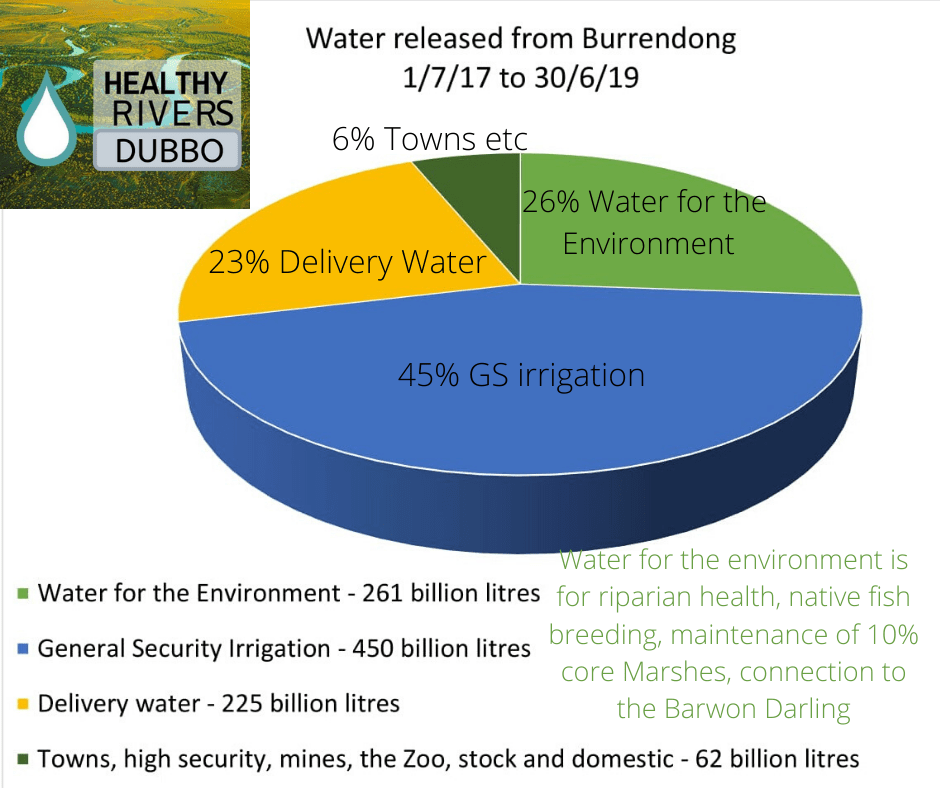
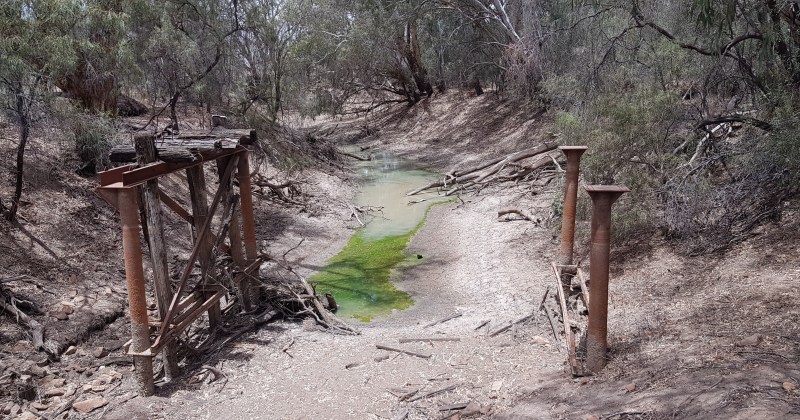
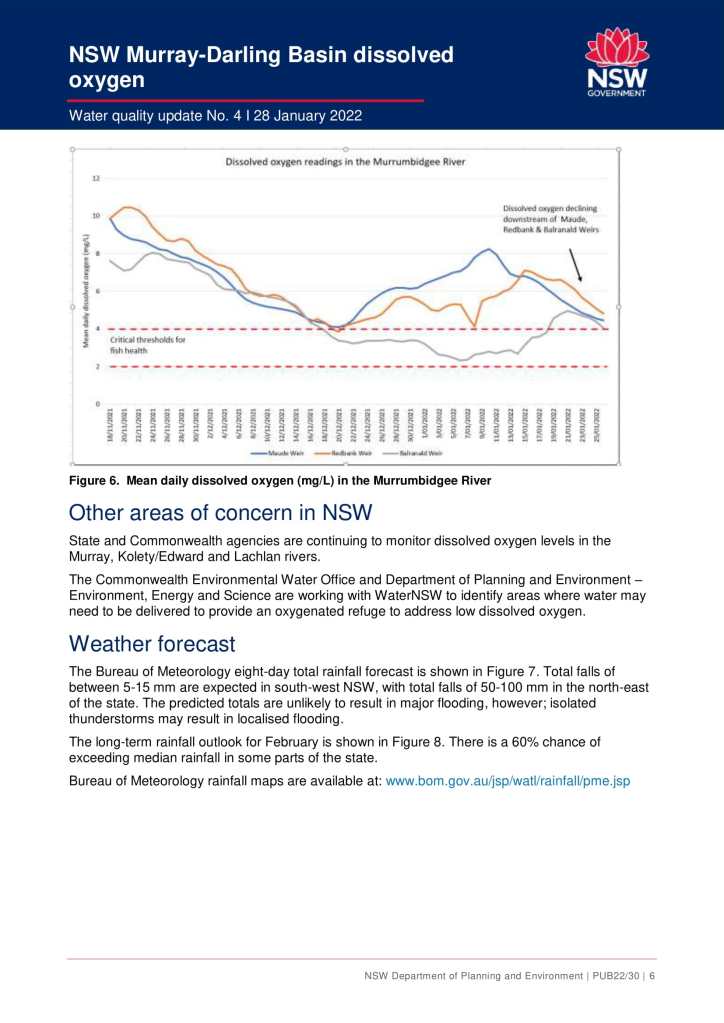
Burrendong dam emptied quickly between 2017 and 2019, and soon after, fish and turtles were being rescued from drying green pools of water downstream of Warren.

As the dam approached 0%, plans were made to rescue platypus in anticipation of the river stopping at Burrendong, and Dubbo faced day zero.

But have we learnt our lesson?

No. The allocation settings for Burrendong have not changed. Burrendong dam will be emptied every two years, regardless of the climactic outlook.

The government could chose to consider the droughts that have happened since 2004 when determining water allocations – but they don’t. Here’s what they say:

“After the Millennium Drought, NSW opted not to take a more conservative approach to its water allocations to improve water security for critical needs in the event of a future severe drought. Rather, in the event of the next drought, it was preferred to use other emergency drought mitigation measures to support communities. These include carting water for some domestic uses and restricting access to carryover water in general security licence accounts to meet higher priority needs.

In the wake of the recent drought, there are again calls to reduce water allocations to mitigate the impact of future droughts—that is, to be more conservative in how much water is allocated over a particular period to keep more water in reserve. However, this could potentially have a cost to productivity across non-drought years.” NSW Water Strategy page 88.

The government would rather let the river run dry than reduce water used for irrigation.

Read Healthy Rivers Dubbo’s submission to the second draft Macquarie-Castlereagh Regional Water Strategy.

Macquarie-Castlereagh Regional Water Strategy

Right now, the NSW government is asking for your feedback on how water is managed in the Wambuul-Macquarie and Castlereagh catchments.

Remember how severe the 2017-2020 drought was? It shook our region.

Write a short submission

The best available science tells us the chance of droughts that severe happening again have jumped from one in a thousand years, to as high as one in thirty years.

The river was cut off downstream of Warren town. Insurance populations of native fish, mussels and turtles had to be rescued from drying green pools. The Ramsar listed Macquarie Marshes caught on fire.

Plans were put in place to house rescued platypus, should the dam and downstream river run completely dry.

As Burrendong dam approached 0%, towns like Nyngan and Dubbo came within months of potentially running out of water.

The scramble to find more groundwater that wasn’t contaminated with dangerous PFAFs highlighted how susceptible to water mis-management our communities are.  

Write a short submission

Wambuul/Macquarie Cudgegong Environmental Water Advisory Group

The Wambuul/Macquarie Cudgegong Environmental Water Advisory Group is made up of representatives from a range of local interest groups, who provide advice on planning, management and monitoring of water for the environment in the mid and lower Wambuul/Macquarie valley.

NSW Nature Conservation Council has been represented on the Wambuul/Macquarie Cudgegong Environmental Water Advisory Group since it’s inception in 2000.

Group Meeting Communiques: – LINK

Meeting summaries:

Media Release: Chance to fix broken water rules in the Wambuul-Macquarie

13 October 2022

The second draft of the Macquarie-Castlereagh Regional Water Strategy is on public exhibition until November 1st.

Two webinars are being held Monday 17th, and Monday 24th. To register, go to the website.

Regional Water Strategies for the state were triggered by the severe 2017-2020 drought, which saw flows in the Wambuul-Macquarie River cut off at Warren, native fish rescued from shrinking green pools, and communities like Nyngan and Dubbo months off ‘day zero’.

The strategy includes climate change predictions that suggest the chances of another severe drought happening again could rise from a one in a thousand year event, to a one in thirty year event by 2070.

Inflows into Burrendong dam could halve in the next 50 years.

Mel Gray, Convenor of Healthy Rivers Dubbo said:

“It’s obvious a lot of work has gone into this strategy over a long time. There are a lot of great innovative ideas, but some worrying ones as well”

“It is irresponsible to keep managing water releases from Burrendong dam based on rainfall data from before 2003. Ignoring the recent unprecedented, severe drought, and allocating water as if it never happened is bordering on negligent.”

“Common sense dictates that enough water should be kept in Burrendong Dam to make sure Dubbo and other communities have enough water to survive more frequent and severe droughts. Town water security is the reason that tax payer money paid for that dam in the first place.”

“The only purpose the controversial Gin Gin re-regulating dam project would serve is to allow even more water to be taken from the river. The significant damage the dam would cause to native fish habitat and the Ramsar Macquarie Marshes is well documented. It’s time to scrap the Gin Gin dam dud of a project.”

“Reducing the size of the flood mitigation zone of Burrendong dam would put Dubbo at a higher risk of being flooded. After the events of this week, it’s ludicrous that this option is even mentioned in the strategy.”

Media Contact

Mel Gray – Convenor, Healthy Rivers Dubbo 0431 471 310

River Community snubbed

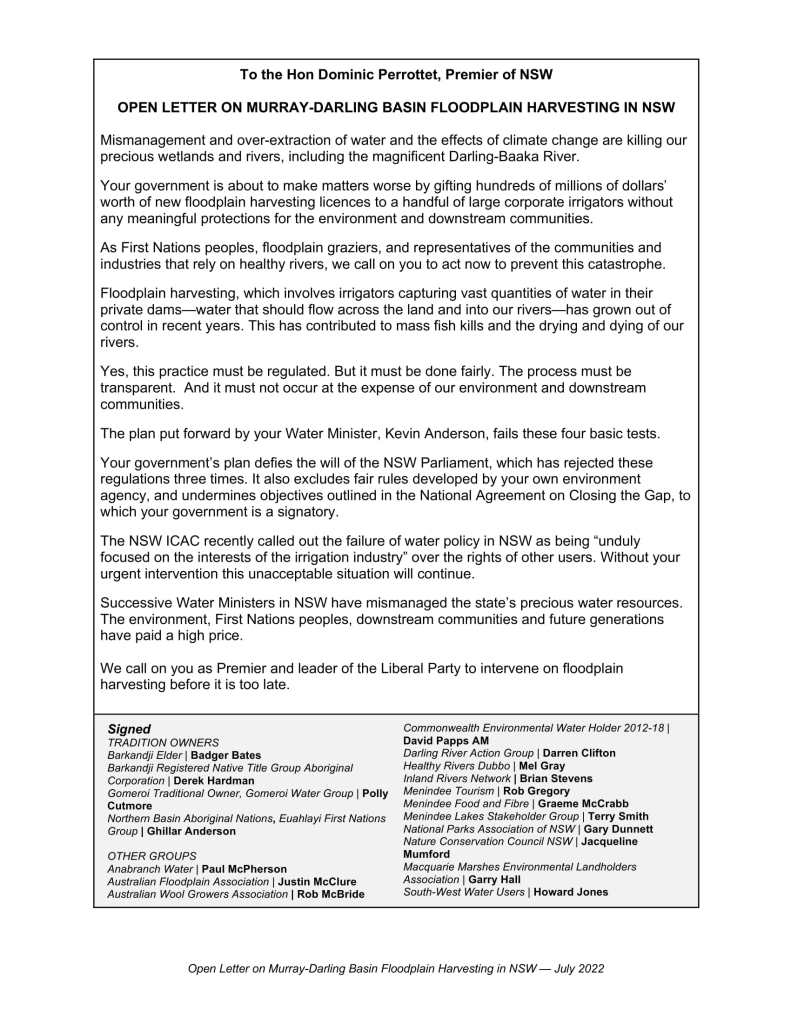
Representatives of 22 groups from inland NSW wrote to the Premier in July, raising serious concerns with the government’s floodplain harvesting regulations.

Both the Premier and the NSW Water Minister have refused to meet with community members.

This group is a true representation of the communities who will feel the brunt of the floodplain harvesting policy. The group includes Traditional Owners, floodplain graziers, recreational fishers and tourism operators, as well as concerned regional residents.

Daily Liberal, 4 Oct 22 Healthy Rivers Dubbo’s Mel Gray among 22 representatives calling out Water Minister Kevin Anderson’s ‘controversial’ laws

Excerpt:

Concerns of numerous groups have been ignored after they sent an open letter condemning the NSW Water Minister Kevin Anderson’s floodplain harvesting regulations in water systems including the Wambuul Macquarie river.

The regulations are so divisive that they were disallowed in the NSW Upper House for the fourth time last week, in a vote of 16 for and 15 against.

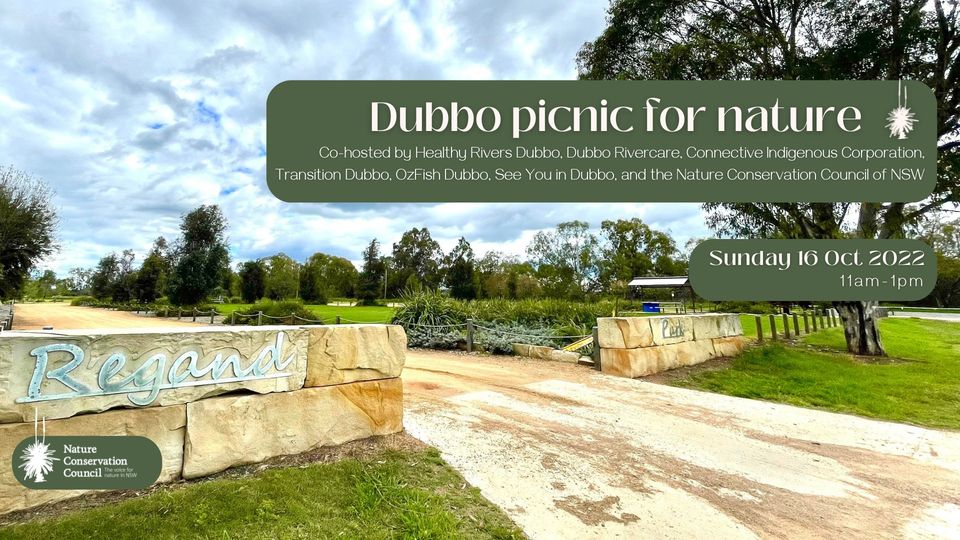
Picnic for Nature🌳 – Strategy coming – AGM

Come join us for our first Picnic for Nature

NSW nature Conservation Council has a bold plan. Communities across NSW will come together to host and hold picnics to celebrate nature.

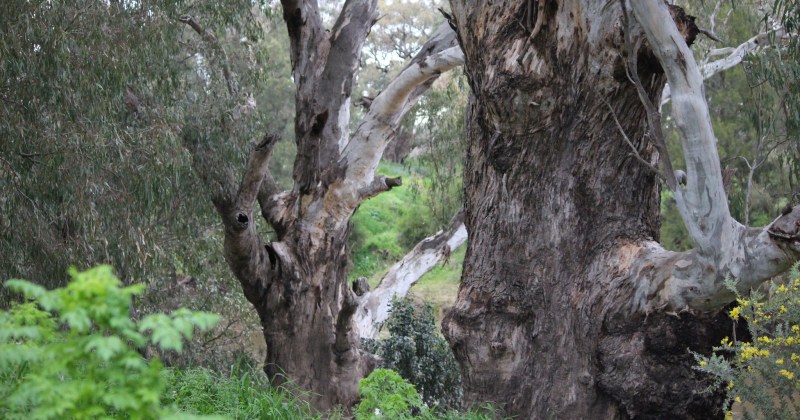
In Dubbo we are holding it by the beautiful Wambuul Macquarie River where we can sit amongst the ancient 500 year old red gums and celebrate the life of the river. There will be live music, cultural dancing, jumping castle, and a river walk and talk. Bring your friends and family, rugs and chairs, your lunch, and a plate to share if you like.

Date: Sunday 16 October 2022 Time: 11am to 1pm at Regand Park – Facebook event

Environmentally friendly event: Bring your own non-plastic non-disposal cutlery, plates and cups for your chance to win some great prizes!

Please RSVP: https://www.nature.org.au/dubbo_picnic_for_nature
You must RSVP to get your free icecream voucher 🍦😋


Coming soon – Second draft Regional Water Strategy

Consultations for the next draft of the Macquarie-Castlereagh Regional Water Strategy will be happening this month. The draft strategy will be published on Tuesday 4th October.

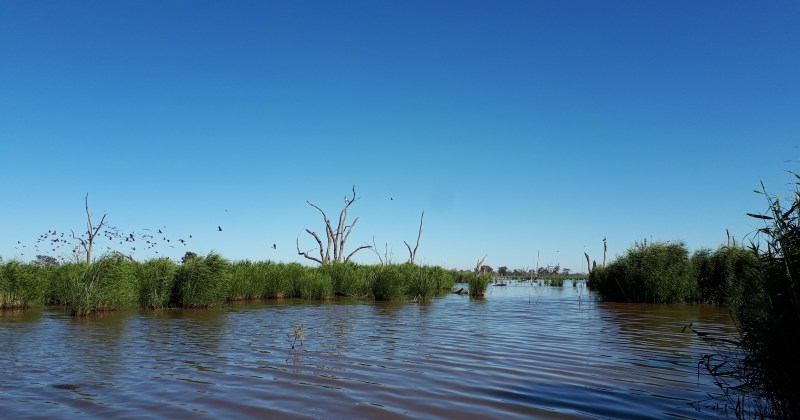
Is the Wambuul Macquarie River more than just an irrigation channel?


Look out soon for an email from Healthy Rivers Dubbo, making it easy to have your say.

Consultation dates: 
Tuesday, 11 October
10:00 am – 1:00 pm
Dubbo RSL Cnr Brisbane Street & Wingewarra Street

Or

Webinar – Tuesday, 24 October 12:00 pm – 1:30 pm – register for webinar

Healthy Rivers Dubbo – AGM

Wednesday 19th October at 6pm.
email healthyriversdubbo@gmail.com to get the zoom link


Healthy Rivers Dubbo is a grass roots community network dedicated to providing a strong voice for our local rivers, aquifers and wetlands in the Murray-Darling Basin for the benefit of wildlife, plants and people. We pay our respects to Traditional Owners past and present and acknowledge that this land was never ceded.

Our Vision for Dubbo’s Floodplain

Right now, there are discussions being had about the future of Dubbo’s riverside land. While the vast majority of people that we’ve spoken to want the land to remain open public parkland, there is a private rugby club who have declared their intentions to construct a sprawling precinct over the public space.

This is our vision for this precious piece of remaining river-side country..

There should be no new sporting fields to be included in the river corridor. This area needs to be kept for public parkland, and for environmental restoration. River flood plains are sensitive environments and introducing more sports fields and associated infrastructure will have further impacts on the corridor and on the river. 

The north and south precincts need to have as little infrastructure as possible but still allow public access and enjoyment. A sculpture park, children’s playground, small number of toilets, a small amphitheater would be examples of acceptable ‘infrastructure’. Pathways should be natural, i.e. dirt, woodchips or crushed granite. Universal access could be provided but only extend into part of the site but it would not be appropriate to have hard surfaces criss-crossing the whole of the precincts. In this regard vehicle access must be kept to a minimal and therefore no car parking areas be provided. Consideration could be made for dirt or crushed granite access roads (for staff) with a small number of inline parking adjoining the access track.

A mixture of forest, open woodland and some wild meadows could be envisaged. An arboretum style landscape with endemic species and a small amount of information plaques be provided.

Small wetland area with adjoining bird hide.

Sporting groups can be accommodated at Council’s many open spaces dotted throughout the established parts of the city or in the new subdivisions that are soon to be developed. There is a development application currently in at Council for the $22 million Dubbo Sports Hub which will have 4 football fields. That would be more than sufficient area for the football teams. Further areas could be adjoining Bunglegumbie Road or Sheraton Road. A developer in town proposed a football complex on Sheraton Road 10 years ago, with no further pursuit of that idea heard since, let’s reinvigorate it.

Introducing football fields in the river corridor will upset a large proportion of Dubbo’s population. Not introducing football fields in the river corridor but locating them elsewhere will not be to the football clubs’ detriment. It would be actually be a positive outcome for them to be located next to already established schools (i.e. the Dubbo Sports Hub adjoins Dubbo College and the CSU campus) or if located on Sheraton Road would be near the schools in that part of town. This would mean schools would have easy access to the fields or children could go straight from school to football training saving car pick-up and drop-off. 

Regand Park has had a brilliant master plan previously prepared by Moir Landscape Architects in 2013. With a few modifications (i.e. no longer needing a velodrome and having less infrastructure than shown on the earlier plan) the parkland would be a credit to Dubbo and be a drawcard for visitors and residents alike. 

New sporting fields need to be preceded by up-to-date strategic documents, master plans, needs assessments, etc. Why would ratepayers want to pay for facilities that may or may not be required? The cart should not go before the horse. If fields are required, the need for such has to be assessed properly and a plan provided. Consideration then needs to be made of Council’s current public open space areas and decisions made on what is to be provided.

Areas such as the north and south precinct for public parkland and environmental restoration are vital for people’s well being. The areas need to be sufficiently large enough to feel ‘immersed’ in nature. Taking chunks out of these areas will diminish their appeal and usefulness for biodiversity. Football fields and environmental restoration living side by side in the river corridor will be detrimental to the environment with disturbance to both flora and fauna.

Let’s create something wonderful, fun, playful, beautiful, silly, magnificent, creative, crazy, calming, wild, naughty, powerful, silent, honoring, reverential, uplifting and lets do it together!!

Image: Save Dubbo’s Greenspace!

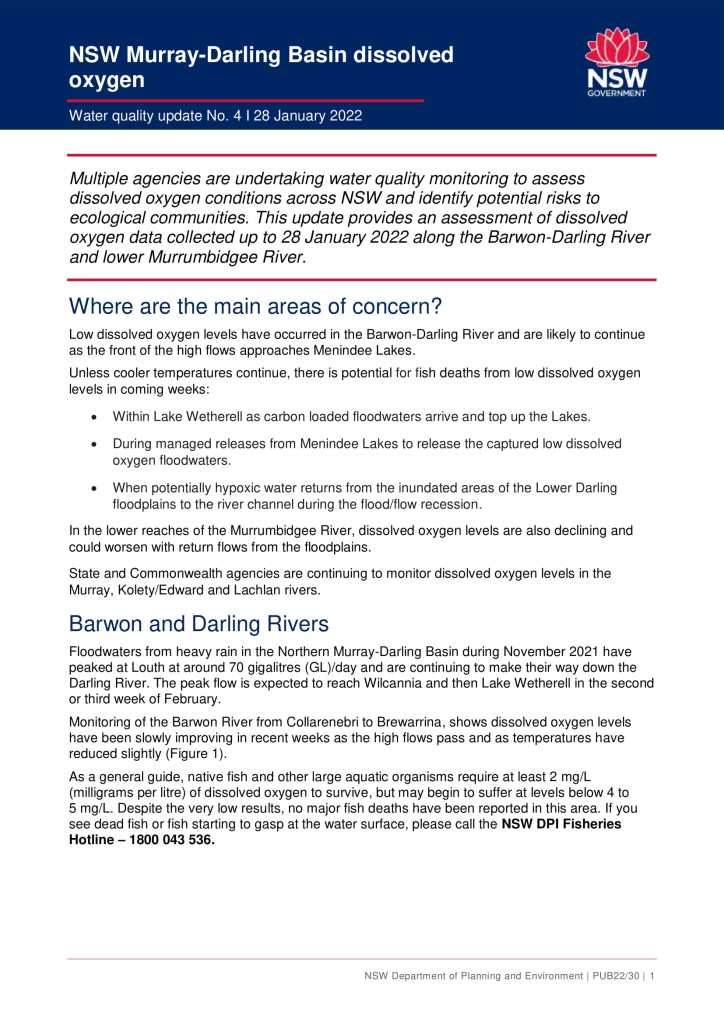
Blackwater in the Darling-Baaka

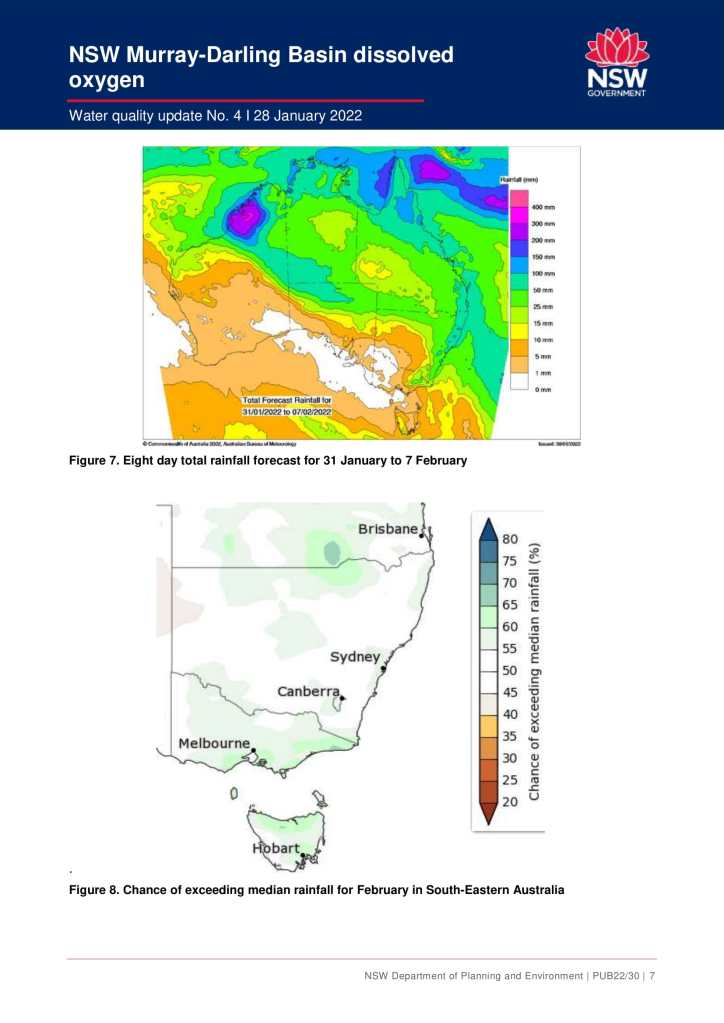
Blackwater event happen when a lot leaf litter and other carbon from floodplains is washed into rivers during big flood events. When floods become less regular, the healthy balance is lost – too much carbon builds up and blackwater events become dangerous.

More frequent overbank flood events would reduce the instance of blackwater events. In recent decades the over allocation of water licences and a sharp increase in floodplain harvesting has created a perfect storm for the Darling-Baaka.

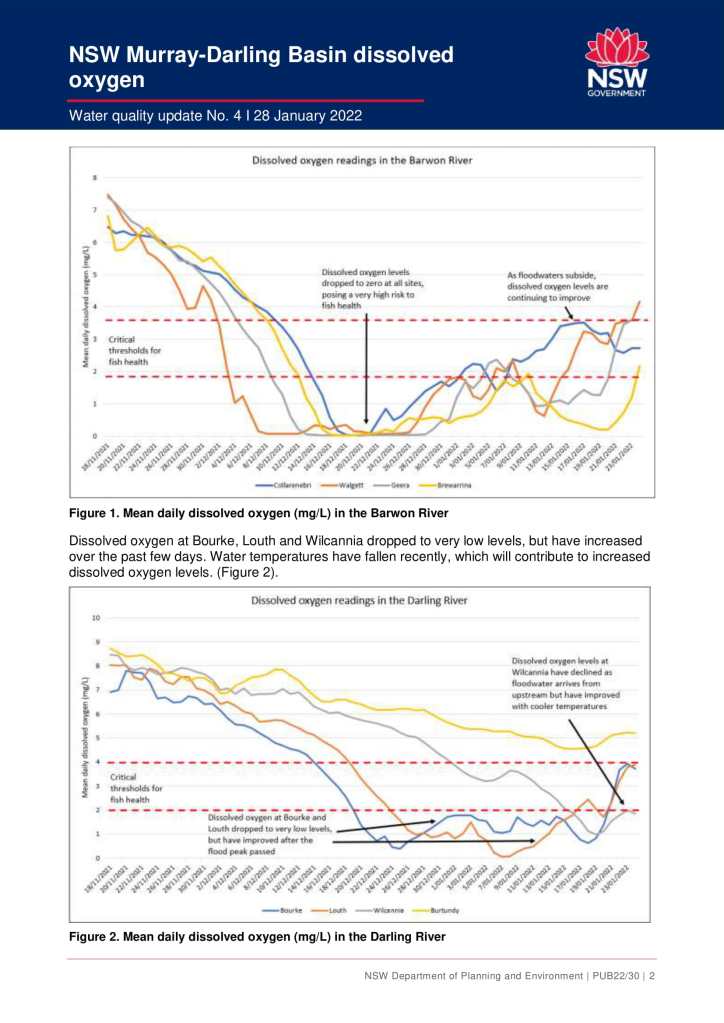
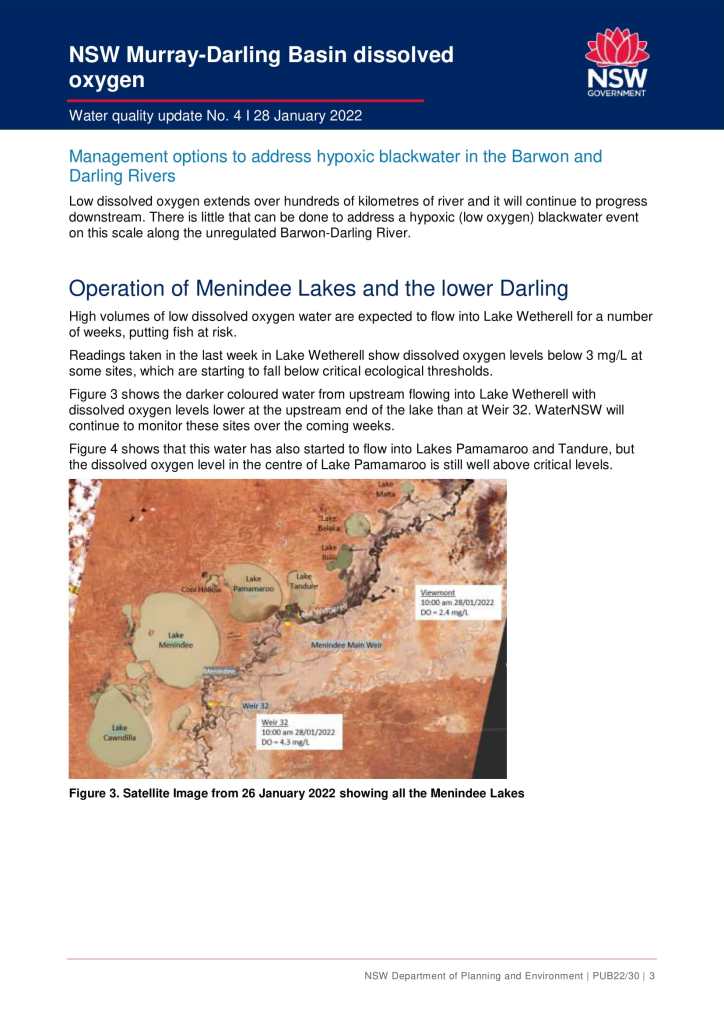
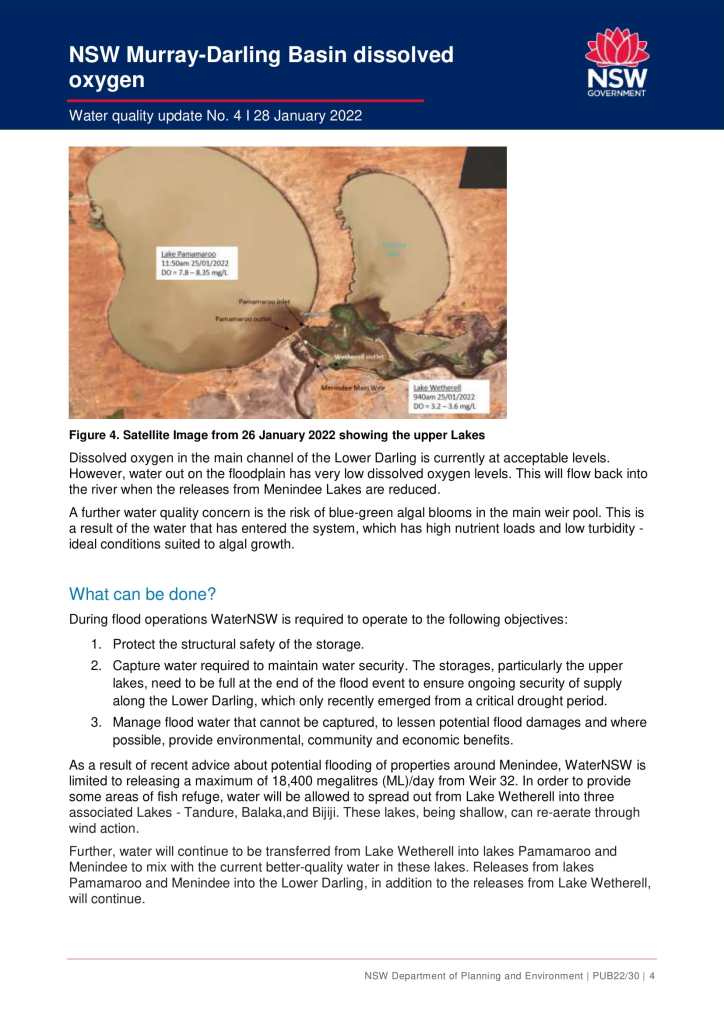
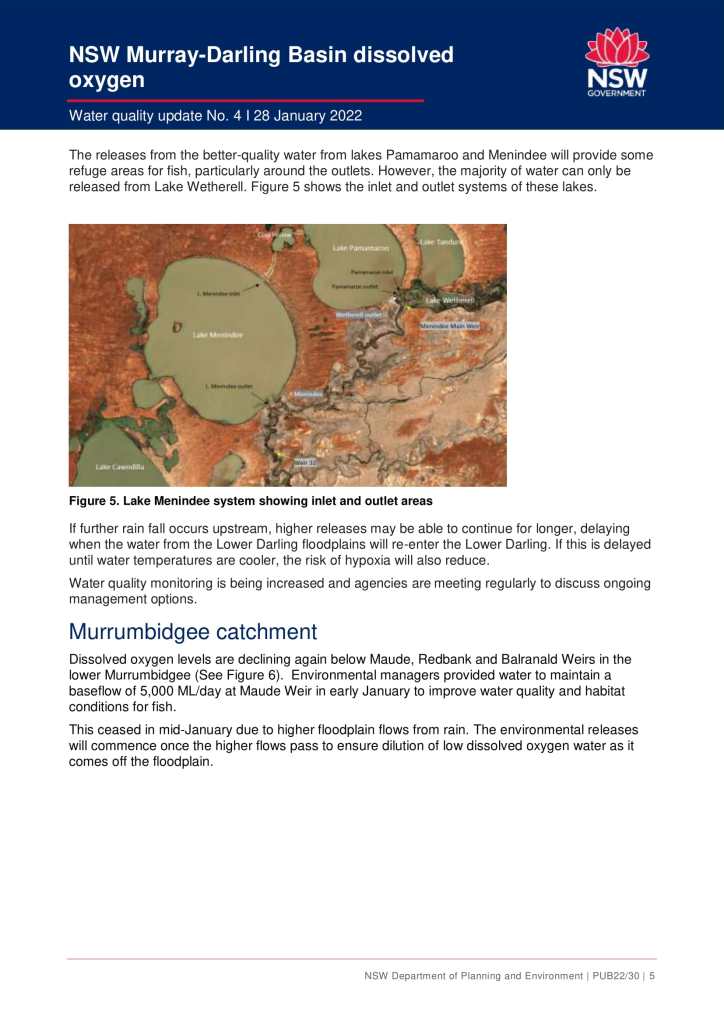
Following is a comprehensive update from the NSW Government on the event currently impacting the river.

Media Release: Transparency from NSW Government still hard to find.

30th January 2022

Repeated calls for the NSW Government to publically release the final business cases for a series of dam proposals continue to be ignored, despite the government ranking improved transparency as their number one priority in the State Water Strategy.

The Legislative Council Portfolio Committee No.7 Planning and Environment Rationale for, and impacts of, new dams and other water infrastructure in NSW: Part 2 report was tabled in parliament on September 20 2021. Last Friday the NSW Government released its response to the report.

The Part 2 report covers Dungowan dam, Mole River dam, Macquarie River re-regulating storage project (aka the Gin Gin dam), Western weirs and Menindee Lakes water savings project.

Referring to the Dungowan proposal the government response bluntly states “… the Final Business Case will not be publically available”.

“How can the public trust that the impacts the Gin Gin dam would have on wetlands, fish, birds and freshwater mussels downstream is being fully considered, if we don’t get to see the business case?” Said Mel Gray, convenor of Healthy Rivers Dubbo.

The purpose of the Gin Gin dam on the Macquarie/Wambuul River is to provide more water to fill the existing irrigation entitlements in the valley[1]. While the government response promises the significant ecological impacts of less water to the struggling Ramsar listed Macquarie Marshes[2] will be taken into consideration, it seems unlikely the government will show the public its findings.

“The Perrottet government are claiming in the State Water Strategy that their number one priority in water management is to ‘Build community confidence and capacity through engagement, transparency and accountability’. While at the same time they are steadfastly refusing to act on community calls to release crucial details. 

“By hiding from the public how big the impacts downstream will be, the government are making communities very nervous.

“Taking more water out of rivers upstream will mean less for First Nations communities, towns, recreational fishers, campers, graziers and water users downstream – it couldn’t be more simple!” Ms Gray said.

Media Contact

Mel Gray – Convenor, Healthy Rivers Dubbo 0431 471 310


[1] ref DPIE.DIP.507 Snowy Hydro Legacy Fund Project Proposal Appendix A 

[2] Notification of likely change in ecological character of the Macquarie Marshes Ramsar site to the Ramsar Secretary General on 17 July 2009 under Article 3.2 of the Ramsar Convention. 

Freshwater Mussels in the Murray Darling Basin

They are amazing biofilters, playing a crucial role in keeping rivers healthy. An abundant food source for First Nations Peoples, Freshwater Mussels are a critically important part of the web of life.

Once, they were second only to fish as the dominate life by weight in inland rivers.

The severe drought of 2017-2020, exacerbated the problems caused by decades of over extraction and mis-mangement of water in the Murray Darling Basin and the unthinkable happened – many rivers dried up completely. The Darling-Baaka was a series of small, green disconnected pools from Bourke to the Murray. The Macquarie-Wambuul was cut of at Warren, completely drying out the Macquarie Marshes and the Lower Macquaire.

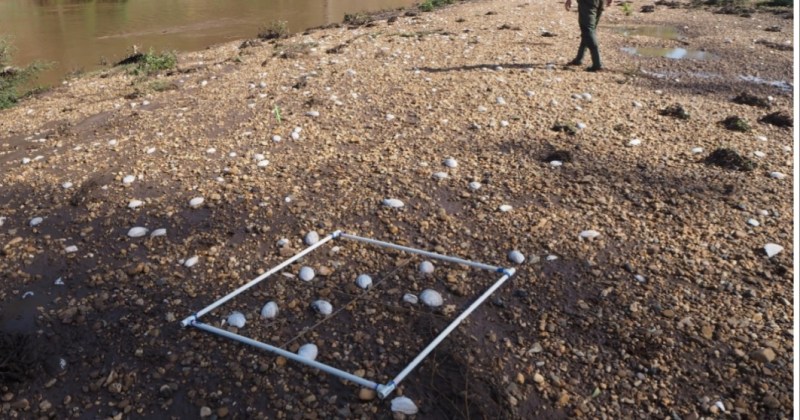
Rightfully, the fish kills that resulted shocked and horrified the community. But the loss of an estimated 2.9 million Freshwater Mussels is a lesser known ecological catastrophe.

This post includes an article that appeared in The Conversation, and lower down a published study of the habitat and flow requirements of the Freshwater Mussels.

The internationally significant Macquarie Marshes is the only place in the northern Basin where remains of all three species of Freshwater Mussels that live in the basin were found. It is home to the biggest and oldest Freshwater Mussel remains that were found in the study, with one specimen measured at 137.2mm.

The presence of large, old Freshwater Mussels in places like the mid Darling-Baaka Rivers and the Macquarie Marshes proves that the natural wetting and drying patterns of these systems never included completely drying out, like they did in 2017-2020.


The Conversation – Academic rigour, journalistic flair

Professor Alan Lymbery – Jan 12th 2022

Freshwater mussels are dying suddenly and in the thousands, with each mass death event bringing these endangered molluscs closer to extinction. Tragically, these events rarely get noticed.

Read the full article here


Habitat and flow requirements of freshwater mussels in the northern Murray-Darling Basin.

Report to the Commonwealth Environmental Water Office
November 2020

Fran Sheldon and Nicole McCasker
Co-authors: Michelle Hobbs, Paul Humphries, Hugh Jones, Michael Klunzinger and Mark Kennard

Australian Rivers Institute, Griffith University

Institute of Land, Water and Society, Charles Sturt University

The authors respectfully acknowledge the Traditional Owners of the lands and waters of the Murray-Darling Basin, particularly those whose lands we walked on in this study, across the Darling, Barwon, Macquarie, Namoi, Gwydir and MacIntyre rivers. We acknowledge that Aboriginal peoples have cared for the rivers for millennia, and pay our respects to the Elders, past and present.

Executive Summary
Freshwater mussels are considered ecosystem engineers of rivers; they modify substrates through burrowing, mediate water quality through filtration, provide food and habitat for other organisms and play a significant role in the biogeochemical cycling of nutrients and are also seriously threatened globally. The rivers of the northern Murray-Darling Basin (MDB) are home to three species of freshwater mussel – the large ‘river mussels’ Alathyria jacksoni and Alathyria condola and the smaller ‘floodplain/billabong mussel’ Velesunio ambiguus. As sedentary, long-lived organisms, obtaining an understanding of the habitat requirements of resident freshwater mussels will provide insights into the natural hydrology of Australia’s inland rivers, and the potential role healthy populations of freshwater mussels could play in influencing water quality through biofiltration. This project was conceived in response to the extensive drought in the northern Murray-Darling Basin between 2017 and early 2020 and the reports of extensive mussel mortality. The specific aims were to review existing knowledge and identify knowledge gaps in relation to environmental water requirements, life history, physiological tolerances and habitat requirements and cultural significance of freshwater mussels in the Murray-Darling Basin, improve baseline understanding of distribution and structure of freshwater mussels in the Northern Basin and make recommendations for land and water management to protect freshwater mussel populations. This was achieved through a predictive analysis of mussel distribution, and analysis of the hydrological conditions during the drying event and a field survey to establish the extent of mussel mortality at sites across the northern Murray-Darling Basin……….

……… The combination of rapid and quantitative surveys used in this study suggest that the loss of mussel populations across the northern Murray-Darling Basin resulting from the drying conditions of 2017- 2019 is significant and widespread. This is a cause for concern given the longevity of mussel individuals and the poor evidence of widespread recent recruitment. Based on our analyses we make the following five (5) broad recommendations:

  • Recommendation 1: that further research needs to be undertaken to understand the biology of freshwater mussels in the northern Murray-Darling Basin, including their reproduction, recruitment, growth patterns and diets, as well as their role in the ecosystem of the northern Murray-Darling Basin Rivers – not least because, besides fish, they were historically the dominant animal by weight in these rivers.
  • Recommendation 2: that a focus be made on monitoring freshwater mussel recovery in both the short- and long-term. This should include an understanding of which fish species act as hosts and what conditions are required for successful recruitment and establishment of juveniles.
  • Recommendation 3: that the importance of low flows and refugial habitats, reaches and waterholes, be formally recognised for freshwater mussels in the northern Murray-Darling Basin and the flow requirements of freshwater mussels be incorporated into flow management plans.
  • Recommendation 4: that the role of refugial reaches and waterholes in the landscape persistence of mussels and fish be recognised and the flow required to maintain the integrity of these physical places in the channel network be understood and incorporated into flow management plans. This would require a basin- wide perspective of the Water Sharing Plans and Water Resource Plans to ensure the critical area of the Barwon-Darling River has adequate flows for long-term population survival.
  • Recommendation 5: that a specific Freshwater Mussel Recovery Plan be developed in consultation with the communities of the northern Murray-Darling Basin and this plan articulate with Fish Recovery Plans.