Blog Feed

Make a submission – NSW Upper House Inquiry

Macquarie River reregulating storage project

Submission Guide: Inquiry into the rationale for, and impacts of, new dams and other water infrastructure in NSW – focus on Macquarie River reregulating project.

This inquiry is into the following projects: Wyangala dam wall raising, Mole River dam, Dungowan dam, Macquarie River reregulating storage project and the Western Weirs project. This submission guide refers specifically to the Macquarie River reregulating storage project. Please make that clear in your submission.

Submit Online: Upload Submission Document Here (fill out contact details on the first screen. Elect if you want your submission public on the second page. Upload a document on the third page).

Deadline: CoB Tuesday 22nd September 2020

For more details, see the full terms of reference: ToR

_________________________________________________________________________________________________________________________

 Points to make about the Macquarie River reregulating storage project:

a) Fix the rules instead of building the project:

  • Water that isn’t in Burrendong is allocated to customers. Only water that is physically in Burrendong should be allocated. That would decrease the risk of the river and towns in the valley running out of water.
  • The NSW Government only look at drought records from before 2004 when working out water allocations.
  • WaterNSW only deduct the volume of water a customer pumps, not the volume they order. If they deducted what they ordered, there would be no need to build this structure.
  • Some types of environmental water and unregulated flows, including inflows from the Talbragar, Bell and Little Rivers, could be captured by this project. There should be consistent rules across the Murray Darling Basin that protect all types of environmental water from extraction.

b) The economic rationale for the project:

  • The public don’t know the estimated cost of the project, we only know it is at least $30 million dollars because it’s classified State Significant Infrastructure.
  • The final business case will not be made public, despite a public promise from the Member for Dubbo Dugald Saunders MP.
  • The volumes of extra water for general security customers, and the cost of the project will be in the final business case, those critical figures will not be available to the public. 
  • The Member for Dubbo stated there would be “not one drop of water extra that goes to irrigation”, however increasing the volumes available for general security customers is an objective of the project.
  • There will be no high security town water licences held in the storage.
  • The extra water for general security will be coming from flows that are currently a type of environmental water. The environment will have much less water, even though there will be small increase in water available to the general security environment account.
  • Only general security irrigation customers will benefit from this project.
  • WaterNSW have had a legal obligation to construct a fishway at Gin Gin since 2011. The design has been done. WaterNSW should just install a fishway and reinforce the current Gin Gin weir instead of constructing a very large expensive new dam.
  • There is no sound socio economic case provided for this project.

c) The environmental and socio-economic impact:

  • A registered aboriginal heritage site will be destroyed.  
  • The socio-economic impact of reduced flows downstream of Marebone weir will not be considered. Grazing, unregulated irrigation and tourism opportunities will be significantly negatively impacted by the project.
  • Towns like Warren and Carinda will be at an increased risk of the river running dry again.
  • Gin Gin is a very popular recreational site.

   Water  

  • Unregulated, natural flows including flows entering the river from the Bell, Little and Talbragar Rivers are critically important for aquatic native animals and fish to breed, feed and migrate.
  • Natural flows carry nutrients, occur when the atmospheric conditions are just right, and are the correct temperature.
  • There will be drier conditions downstream, including the Macquarie Marshes. This will mean it will be a lot harder for the Macquarie River to connect to the Barwon-Darling Rivers.
  • The 30km weir pool will mean reduced water quality and increase erosion.

Marshes and migratory birds

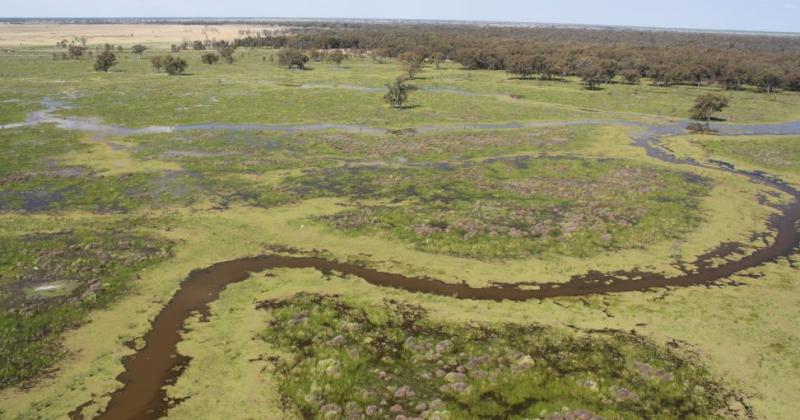
  • The internationally significant Ramsar listed Macquarie Marshes are one of the most important waterbird breeding sites in Australia. Australia has a legal obligation to protect Ramsar wetlands.
  • A notice of “change of ecological character” was issued in 2010 because the condition of the Macquarie Marshes had deteriorated so much. The main reason for the notice was a change in flow regimes.
  • This project can only exacerbate the ongoing decline in the health of the Macquarie Marshes and therefore the habitat for 14 species of migratory birds, 10 colonial-nesting species, and a total of 233 native species of birds including 77 species of waterbird, some of which are listed as critically endangered.
  • The Marshes also provide habitat for 60 native reptile species, 11 species of native fish, 29 native mammals, 15 native frogs and 324 native plant species.
  • More details Professor Richard Kingsford submission to the EPBC referral here

   Native fish and the riparian zone

  • The habitat of native fish listed as endangered and critically endangered under the NSW Fisheries Management Act and the Federal EPBC Act will be significantly impacted.
  • One of the last remaining significant Murray Cod breeding sites on the Macquarie is immediately downstream of the proposed dam.
  • The 30km weir pool would mean a loss of riffle zones, snag habitat, the inundation of spawning and recruitment sites. Details in the EPBC referral
  • A 30km long weir pool of still water will cause Murray Cod eggs to sink and die.
  • The vegetation along the river, including centuries old River Red Gums, will likely drown due to extended periods of inundation.
  • The frequent fluctuations in water level will not provide vegetation or biofilm a suitable hold. Over time, this will mean the weir pool will not support a food web for native fish, reptiles, waterbirds or any other aquatic animals. Dr Martin Mallen-Cooper’s comments.
  • Transforming a moving part of the river to a still pool will suit carp and mosquito fish.
  • Fish passage at Gin Gin is very important and overdue. The compulsory fishway component of the re-regulating structure will not ameliorate the significant impacts the project would have on the habitat of threatened and endangered native fish and other aquatic animals.
  • Native Fish in the Macquarie River are already listed as an Endangered Ecological Community.

f) Other matters:

  • The project will likely have significant impacts on matters of national significance, and should not be assessed by the NSW Government who are the proponents of the structure, this is a clear conflict of interest.
A Sobering Read – EPBC referral for the Macquarie River re-regulating dam

The official document produced by the NSW Government that will inform the environmental impact statement for the Macquarie River re-regulating dam details the expected significant impacts on the habitat of threatened and endangered native species.

WaterNSW suggested in this document that the impact the project would have on the Ramsar listed Macquarie Marshes and on migratory birds would not be significant, however the Commonwealth Government disagreed, and found the expected impact will indeed by significant.

Here is a summary of the expected significant impacts taken directly from the document:

  • Change of flowing river habitats to pool habitat.
  • Loss of freshwater habitat types such as riffle zones due to inundation, and changes to flow regimes and water quality.
  • Impacts to aquatic habitats and riparian vegetation from the regular variability of water levels within the storage and the associated effects on river bank stability.
  • Loss or decrease of available recruitment areas, due to changes in available habitat.
  • Likely impacts to the structural elements that make up established habitat of vulnerable Murray Cod in the existing Gin Gin Weir pool, including potential spawning sites.
  • The new operational regimes may impact larval recruitment and the movement of fish in the locality.
  • Greater variability in the pool levels and altered fish passage opportunities at the location.
  • The alterations to important fish habitat in this locality and the potential operation effects on habitat and spawning for Trout Cod and Murray Cod may give rise to potentially significant impacts to these species.
  • Potential impacts to the aquatic environment are likely to be more marked with a more extensive pool created behind the reregulating structure than the existing weir, greater variability in the pool levels and altered fish passage opportunities at the location.
  • Potential direct impacts on threatened ecological communities within the project area may include inundation of vegetation as a result of impoundment.

Potential impacts to listed migratory species include:

            • Loss or changes to habitat, including changing flowing river habitats to pool habitat

            • Temporary displacement during construction activities

            • Alterations to hydrological regimes

            • Impacts to groundwater dependent ecosystems

            • Impacts to aquatic habitats and riparian vegetation from the regular variability of water levels within the storage.

Read the full document here:

Murray Lower Darling Rivers Indigenous Nations on the Macquarie re-regulating dam

The Murray Lower Darling Rivers Indigenous Nations (MLDRIN) is a confederation of Sovereign First Nations from the Southern part of the Murray Darling Basin (MDB). The group currently includes Delegates from 24 Nations across Victoria, NSW, the ACT and South Australia.

MLDRIN understands that the construction and operation of the proposed Macquarie re-regulating structure will have significant detrimental impact on matters of national environmental significance, including a Ramsar wetland and Federally listed threatened species. The proposal will also have detrimental impact on places and species of profound cultural significance to Traditional Owners of the Wiradjuri and Wailwan Nations. We also wish to highlight that engagement and consultation with relevant First Nations has been grossly inadequate…..

… We wish to stress that the waterways and landscapes likely to be impacted by the Re-regulator project are of profound cultural significance to multiple First Nations groups. The referral documents indicate that consultation with these Nations has grossly inadequate and that erroneous understandings of First Nations people have underpinned engagement and project design.

MLDRIN is a peak representative body, advising the MDBA, as well as NSW agencies (including sections of the Department of Primary Industries and Environment) regarding appropriate consultation with First Nations on waterway management issues. MLDRIN has a formal statutory role under he Basin Plan to assess water resource plans prepared by State Governments. MLDRIN has received no formal notification or been engaged by the proponent on this project.

MLDRIN’s Wiradjuri Nation delegates have identified the Macquarie Marshes and Murray Cod as critical cultural assets. Existing issues with poor water quality, water extraction, regulation and pollution have already degraded these sacred values. The re-regulator project is likely to greatly exacerbate these impacts…..

…. MLDRN is also deeply concerned by statements indicating the likelihood of inundation of cultural heritage features around the Rocky Point area. The referral also indicates that ‘The nature of the recorded sites suggests that similar sites are likely to exist at other locations along the river and across the landscape.’ It is grossly inadequate to suggest that cultural heritage sites subject to induction and destruction can be substituted for other sites along the waterway. All cultural sites bear a unique testimony to cultural traditions and occupation of country and cannot be substituted.

MLDRIN is also deeply concerned that the 30km weir pool that would result from construction of the re-regulating structure will lead to inundation and drowning of ancient River Red Gums and other physical and biotic features of cultural significance In summary, MLDRIN is deeply concerned that this project will pose significant, new threats to a river system and associated features of National Environmental significance that are already critically stressed. The related cultural values are also likely to be significantly impacted, with poor First Nations consultation evident in the project design.

Download MLDRIN’s full submission here:

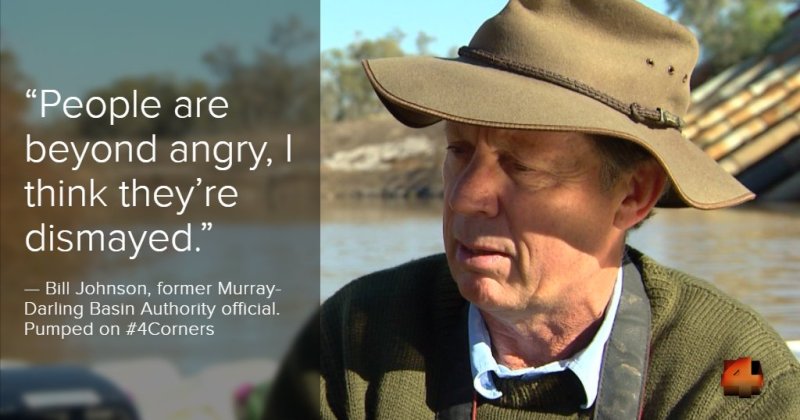
River Ecologist Bill Johnson comments on the project

Bill Johnson, 1st May 2020

Introduction; water for irrigation, utilities and stock and domestic use

In the Macquarie Valley, tributary flows downstream of Burrendong Dam are considered part of the regulated supply for the purpose of meeting water orders or other commitments. If the tributaries are flowing their water is used, where possible, to meet demands that would otherwise be met from the regulated supply in Burrendong Dam.

A former water department regional manager in Dubbo once explained that it helped to think of a ‘notional dam near Narromine.’ From the position of maximising regulation and extractive use this makes sense. But it is a legacy of a time when other values of water were not considered.

Role of the re-regulating storage

The Macquarie River Re-regulating Storage (MRRS) Scoping Report[1] states that;

The new re-regulating storage will improve water security, reliability and delivery efficiency in the Macquarie River valley. The re-regulating storage will be located downstream of Burrendong Dam, between the townships of Narromine and Warren (p 6).

WaterNSW and the consultants have said that the new storage will not regulate tributary flows.

The MRRS Scoping Report says otherwise. Section 2.1.1 points out that, under the current plan, some tributary flows will be regulated (my highlighting).

The proposed re-regulating storage would function as a storage that is capable of capturing surplus flow events and regulating them, as required, to reduce operational losses. The intent of the storage is to capture operational releases from Burrendong Dam that are surplus to operational need and to store them temporarily until required to supply subsequent water orders. Releases identified as surplus within approximately 6 days’ travel time from Burrendong Dam may potentially be captured.

The source of operational surplus flows released from Burrendong Dam can include the following:

  • Customer orders that are subsequently cancelled due to, for example, rainfall events occurring which negate the need for irrigation
  • Orders subsequently met by useful tributary contributory inflows
  • Releases in excess of those required to cover delivery losses (p 16).

This section cannot be interpreted in any way other than that tributary flows will be regulated by the new storage.

My summary of the Report is;

The purpose and operation of the storage will be to capture operational releases from Burrendong Dam and store them to meet orders. These releases include tributary flows downstream of the dam.

Statements that downstream tributary flows will not be regulated by the new storage are only true because they are considered by WaterNSW to be releases from Burrendong Dam.

A reasonable person would not call tributary flows into the Macquarie, downstream of Burrendong Dam, releases from Burrendong Dam. Flows from the Talbragar, Bell and Little Rivers, Coolbaggie Creek, and other smaller streams that join the Macquarie downstream of the dam do not come from the dam.

A reasonable person would be astonished by this notion. That the notion exists, and is the published position of the NSW Government, would be met with disbelief.

Operation of the weir

The term useful tributary flows, meaning those that can be used to meet orders, demonstrates the NSW Government’s priorities. There is no stated limit to the amount of water to be regulated from the tributaries. Flows will be regarded as useful, and will be regulated, if they can be used to meet orders.

The capacity to hold these flows in the new storage means that more flows will fit the category of useful, and more water will be regulated and extracted. It allows a blank cheque for regulation and extraction of tributary flows.

It is naïve to think that WaterNSW will not use the storage to regulate as much of the tributary flows as possible. It will be managed to maximise the amount of water extracted. The more water it can control the better the narrow financial argument for it will be.

It is likely that tributary flows will be deemed useful, and available for regulation by the storage, if they can be used to;

  • meet irrigation orders rather than using releases from Burrendong Dam,
  • restore flows to regulated sections of the river and creeks downstream of the weir,
  • provide regulated stock and domestic supplies,
  • provide stock and domestic supplies from unregulated flows.

Conclusion

In 1987 the NSW Government published a Regional Environmental Plan for the Macquarie Marshes that said;

The Audit found the WRC [Water Resources Commission] was ineffective in management of the State’s water resources, having difficulty in moving beyond its former role of rural supply authority. Broad water needs of the whole community, including the needs of the natural environment, were residual considerations to irrigation development and operations…The new Department of Water will be required to address cultural, scientific and aesthetic values as legitimate community needs in terms of water management.[2]

Water is mentioned in terms of losses and surplus more than 60 times in the MRSS Scoping Report. The proposal by WaterNSW to build a new storage on the Macquarie River, and the language it uses, show that the perspectives and objectives of the NSW water agencies have not changed since the 1980s.

Government failure to address the broad water needs of the whole community has long been a serious problem. Community dissatisfaction with water management in NSW was a major factor in the National Party’s loss of the seat of Barwon to the Shooters, Fishers and Farmers Party. It is a lesson that hasn’t been learnt.

[1] Water NSW. 2020. Macquarie Re-regulating Storage; Scoping Report. NSW Government, Sydney.
[2] Department of Environment and Planning. 1987. Regional Environmental Plan for the Macquarie Marshes, Department’s Minute: 17 November 1987. NSW Government, Sydney.

Professor Richard Kingsford – comment on the project

9/6/2020

The building of a re-regulating storage on the Macquarie River, as a proposed action has been referred to the Australian Government Department of Agriculture, Water and the Environment for assessment against Matters of National Environmental Significance (MNES) (EPBC Act referral 2020/8652).

Matters of National Environmental Significance (MNES)

  • First, the referral acknowledges that the proposed action is likely to have a direct or indirect impact on the ecological character of the Ramsar listed Macquarie Marshes, but concludes that this impact is not significant. This is clearly wrong and contradicts the overwhelming scientific evidence for the management of the health of the Macquarie Marshes and scientific understanding of river flow and inundation regimes, the listed advice on the management of the ecological character of the Marshes as a Ramsar site, as well as the evidence presented in this submission.
  • Second, the referral acknowledges that the proposed action is likely to have a direct or indirect impact on nationally listed threatened species or their habitats or any threatened ecological community, concluding that this impact is significant. This submission supports this conclusion, based on the scientific evidence but points out the inadequacy of the proponent’s preliminary assessment in relation to the level of impact.
  • Third, the referral acknowledges that the proposed action is likely to have a direct or indirect impact on listed migratory species or their habitats but then concludes that this impact is unlikely to be significant. This is clearly wrong and contradicts the overwhelming scientific evidence for the management of the health of the Macquarie Marshes and scientific understanding of river flow and inundation regimes, the listed advice on the management of the ecological character of the Marshes as a Ramsar site, as well as the evidence presented in this submission.

See the full submission below in PDF form.

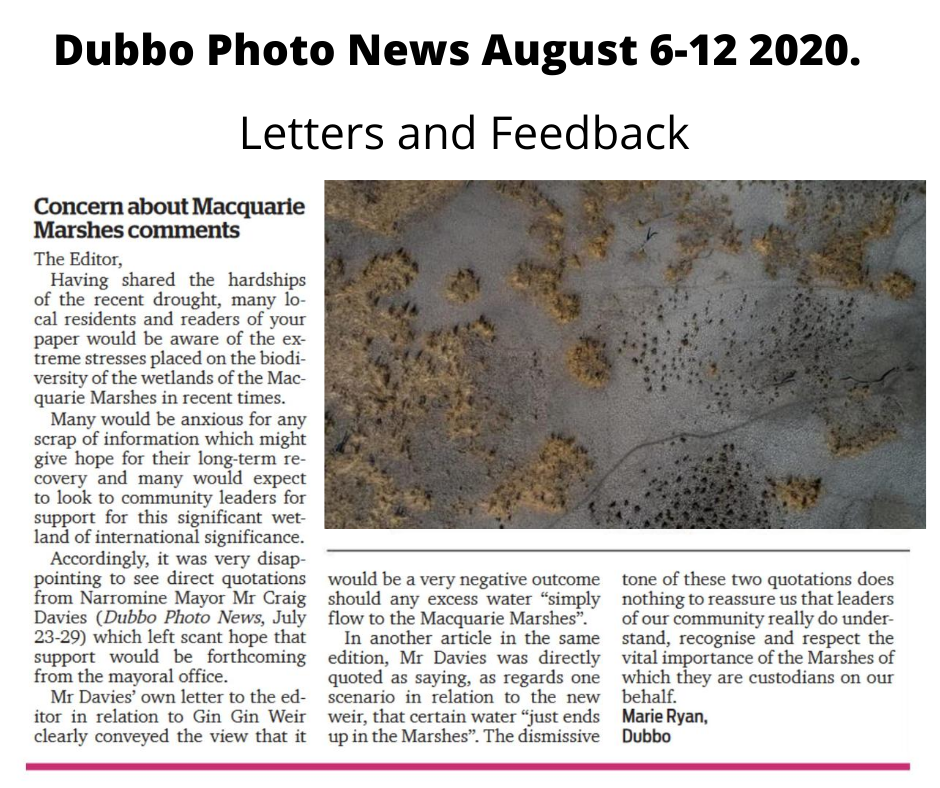
Locals still vocal – Don’t damn the Macquarie

Dubbo’s Marie Ryan takes issue with suggestions by Narromine Mayor Craig Davies that the Macquarie Marshes could be receiving water that in his opinion, they aren’t ‘entitled’ to. 

Dubbo Photo News August 6-12 2020.


Healthy Rivers Dubbo convenor Mel Gray speaks to Rod Corfe on Bourke’s 2WEB Outback Radio


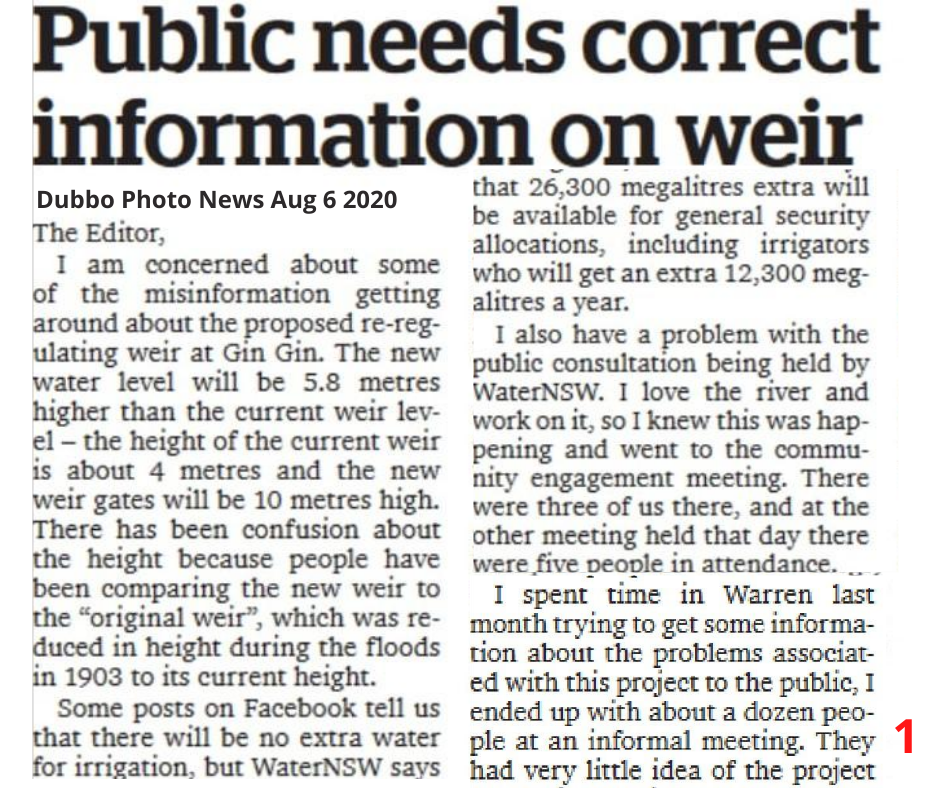
Dubbo Day Award recipient David ‘Harro’ Harris is amazed at how few people know about the proposal to dam the Macquaire, and how much misinformation is getting around about the height of the structure.

1 (3)Dubbo Photo News Aug 6 2020


Western Paddlers NSW are concerned about the loss of natural flows in the Wambuul Macquarie and the internationally recognised Ramsar listed Macquarie Marshes.

12

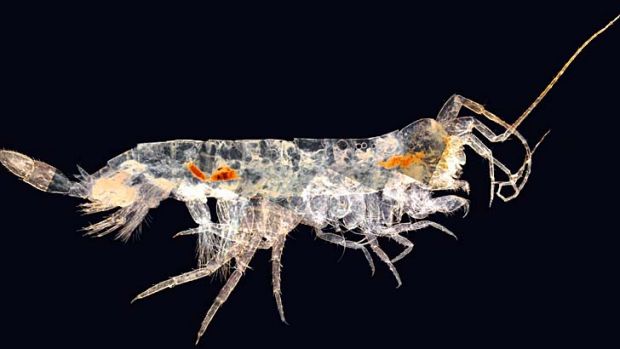
Stygofauna – keeping groundwater clean for 200 million years.

Stygofauna are any bug, beetle, crustacean, worm, gastropd or fish that live in groundwater aquifers.

Never seeing the sun, they have no circadian rhythms. They grow slowly, don’t have many young, live long lives and stay close to home.

Some are from extremely old lineages, with ancestors dating back to Gondwana and Pangaea or the Tethys Ocean, two hundred million years ago. Some display a close relationship with species from other continents which indicates that their ancestors came from a time before the break-up of the super continents.

1373583893350

It is because of their characteristics born of their low-energy environment, and their incredible age, that a lot of stygofauna species are extremely rare and localised.

Stygofauna contribute important ecosystem services by creating a nutrient cycle, and have been recognised as indicators of groundwater health. The stygofauna are small enough to wander among grains of sand in the sandstone aquifers, purifying the water by eating bacteria – playing a similar role to earthworms in soil.

Stygofauna are amazing because they are an inconspicuous but important component of world biodiversity. They represent outstanding examples of adaptation and ongoing evolutionary processes, and contain many ancient lineages of high scientific value and conservation significance.

We know stygofauna are not very mobile, so they make poor colonisers. This means that if all the creatures in one locality are wiped out, it is unlikely that others will quickly replace them.

Stygofauna are vulnerable to extinction from environmental changes and human impacts.

The Pilliga Sandstone Aquifer has been found recently to contain rare species of stygofauna. A survey of 22 sites within the Pilliga Sandstone aquifer conducted in 2016-17 reported a total of eleven taxa of invertebrates, which included ten families from five orders of stygofauna. The results showed stygofauna exist across the entire area.

They are classified as of High Ecological Value in the Pilliga, as the area is covered by the Lowland Darling Aquatic Endangered Ecological Community, listed under the Fisheries Management Act 1994.

#GasFreePilliga

Healthy Rivers Dubbo IPC submission Narrabri Gas Project

Dugald Saunders confirms height of new dam on the Macquarie – its a whopper.

A new dam is being planned on the Wambuul Macquarie River, 200 metres downstream of the current weir at Gin Gin, between Narromine and Warren.

John Laws became interested in the project after Mel from Healthy Rivers Dubbo called him on Monday 20/7/20 to have a chat about it.

Dugald Saunders, member for Dubbo got on the next day and announced that the new dam would only be 1 metre higher than the the current weir at Gin Gin.

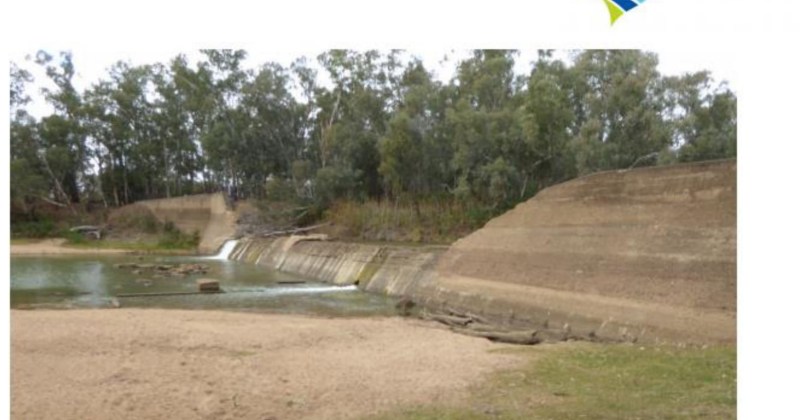
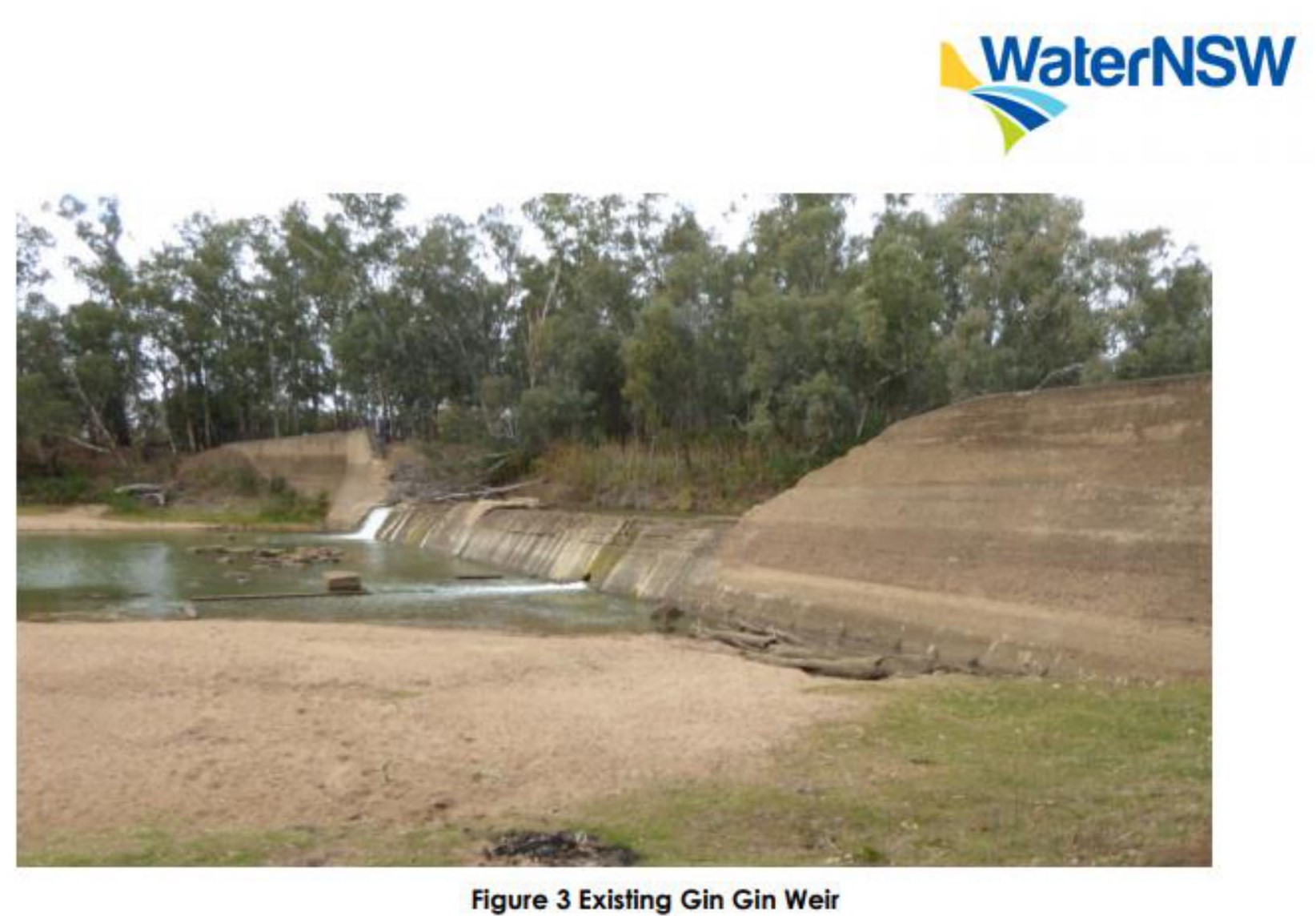
The current weir at Gin Gin is now about 4 to 5 metres high. It was a lot higher once, about 10 metres or so, before floodwaters had their way and trimmed it down.

Doc3-1 (3)

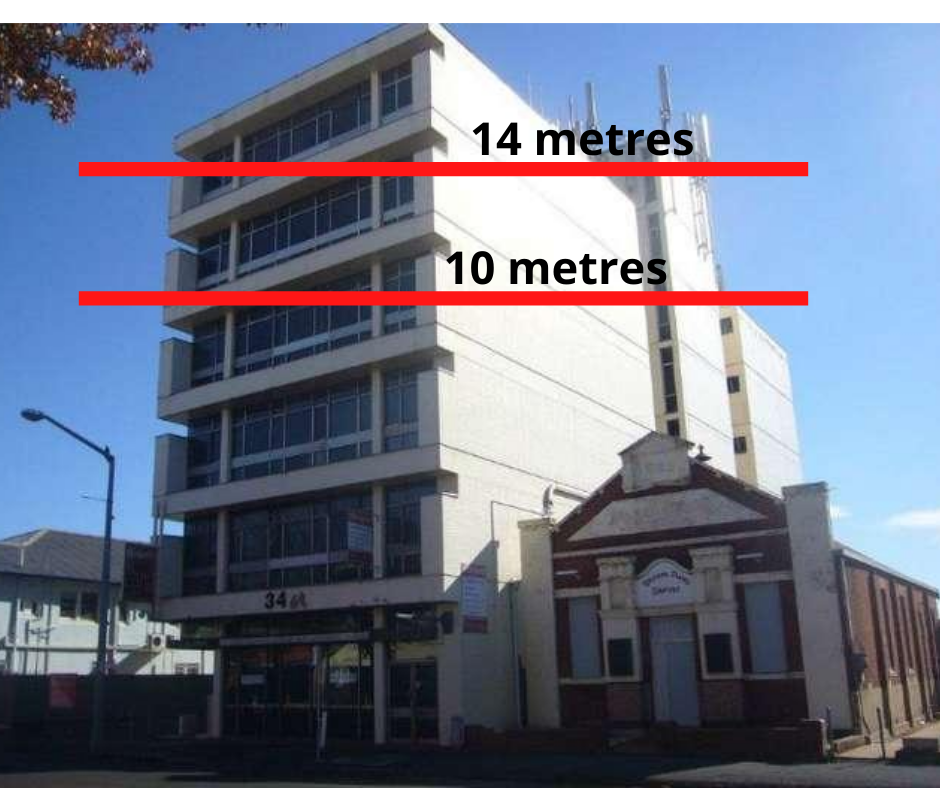
From the start, plans for the new dam are for a 14 metre high structure, with 10 metre high gates, capable of holding back 9,000 Megalitres of water.

WaterNSW have been saying that they will reduce the size of the structure following concerns raised by stakeholders about the significant impact the project would have on Native Fish and the Ramsar listed Macquarie Marshes downstream. They have talked about a structure with 3 stages of 5 metre high gates, capable of holding back 6,000 Megalitres.

However, in the official document (bottom of the first page) signed by WaterNSW on the 28th May 2020 that will inform the environmental impact statement, the project is described such:

Doc3-1 (4) Mel understood that while WaterNSW were saying they would reduce the height of the gates, the official documentation had not changed, so called John Laws back with serious concerns that the Member for Dubbo didn’t understand the scale of the project.

To finalise the question about the height of the new dam, Dugald wrote to John Laws and on Thursday 23/7 the following was read out on air..

The key sentence is “the full supply level of the new structure will be approximately one metre higher than the storage at Gin Gin weir prior to it’s failure.

Prior to it’s failure the weir was about 10 metres high or so.

In a round about political-speak way, Dugald Saunders has confirmed that as Mel and the official documents referenced above said, the new dam will have gates 10 metres high (while at the same time he appears to win the debate like any good politician would).

WaterNSW cannot be trusted.

For reference, 14 metres is almost as high as a 5 story building.

14 metres


Macquarie community rallies for the River.

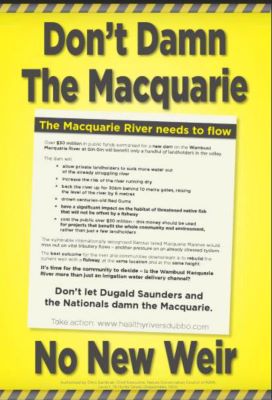
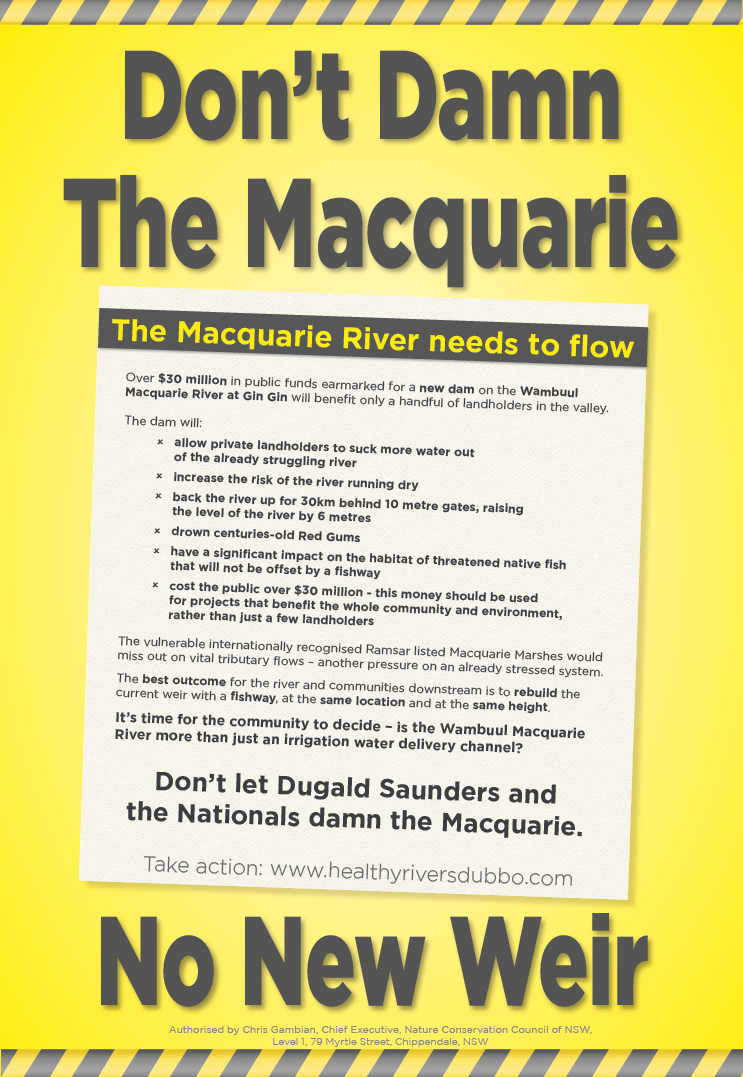
No New Weir. Don’t Damn The Macquarie.

Healthy Rivers Dubbo has launched a community powered campaign featuring television, radio and newspaper advertisements to highlight concerns about plans to dam the Wambuul Macquarie River at Gin Gin, between Narromine and Warren.

Next month the Detailed Business Case for the proposed ‘Macquarie River re-regulating storage’ is due to be submitted, although there is no indication that the public will get the opportunity to see it. We know the cost of the project is over $30 million because of its classification, but the actual forecast cost is being kept from the public, and is expected to be a lot higher.

Don't Damn the Macquarie Ad - final

It’s time now for the NSW Government to change their plans. Don’t dam the Macquarie with a monstrous gated weir, instead rebuild the old Gin Gin weir at the same height, with a fishway.

Coral Peckham, Tubba-Gah Maing Wiradjuri,

“We’re concerned about our sacred sites along the river, and our aquatic flora and fauna. They all need water. Our aims and objectives are to look after Country for future generations.”

Sandra Peckham, Wiradjuri Bogan River People:

“No dam. If this dam goes ahead and a heritage site is destroyed, it will be just like what Rio Tinto did in WA, knowingly destroying cultural sites. “

Garry Hall, Grazier, Macquarie Marshes:

“Roy Butler has the opportunity now to stand up and represent the people of Barwon. This dam will be a disaster for communities, downstream graziers and unregulated irrigators in his electorate. We are the people who voted Roy in, and we need to know he is standing with us now.

“Preferred alternatives to improve water security would include the NSW Government changing its credit policy of allocating water that hasn’t fallen as rain in the catchment.

“The Ramsar listed Macquarie Marshes being in the seat of Barwon means Roy Butler must work hard to ensure the NSW Government meets its obligations as the manager of the internationally significant wetlands. How will those obligations be met when this project will mean a loss of important natural inflows to the Marshes every year?

“Reduced flows in the Macquarie below Gin Gin will mean the Marshes will be drier more often, and it will be even harder to connect the Macquarie and Barwon Rivers, which is crucial for native fish migration and the health of the Darling River.”

Mel Gray, Healthy Rivers Dubbo:

“Dugald Saunders has a choice to make. Will he listen to the community, or allow the river to be turned into an irrigation delivery channel that supports only a privileged few?

It’s time for Dugald to stop the haemorrhaging of public funds being used to design a project that will harm the river, wildlife, the Macquarie Marshes and downstream farmers and communities. Change the plans now – rebuild the old weir, don’t damn the Macquarie.”

David Harris, Project Manager River Repair Bus, Dubbo:

“Bit by bit we are changing the river and making it harder for native fish to survive. This dam will destroy habitat for Murray Cod, Trout Cod, Silver Perch and other species for a 30km stretch, and that includes drowning beautiful old River Red Gums that are hundreds of years old and cannot be replaced.”

“This dam would make a mockery of the many long hours invested by the community in repairing the habitat of the Macquarie River for native fish.”

Neal Harris, Western Paddlers NSW, Mudgee:

“As recreational paddlers, members of Western Paddlers NSW love paddling on the Macquarie River and the Macquarie Marshes. River paddlers seek out natural waterways, and more dams means we’re losing more and more of our wild rivers.

Thirty kilometres of still water, with no vegetation, poor water quality and reinforced banks is not what our paddlers expect or want to experience on the Macquarie, and we would regarded that section of the river a no go zone for paddling.”

Outstanding issues within NSW’s Final Draft Water Resource Plans and consequences for the Murray-Darling Basin Plan – June 2020. Wentworth Group of Concerned Scientists

Water Resource Plans (WRPs) outline how the management of water resources in a particular river catchment will be consistent with the Murray-Darling Basin Plan. They set out the rules and arrangements relating to water take, environmental water (‘planned’ and ‘held’), managing water during extreme events and strategies to achieve water quality standards and manage risks. They also specify environmental objectives and watering requirements. WRPs include groundwater systems and surface water areas (rivers and creeks).
Catchment-specific water plans that are established under state legislation also need to be updated for consistency with the WRPs and requirements of the Basin Plan (i.e. Water Sharing Plans (WSPs) under the NSW Water Management Act 2000).

If the WRPs and WSPs are accredited in their current form, there is potential for significant consequences for river health and Ramsar-listed wetlands of international importance including the Gwydir wetlands and Macquarie Marshes, undermining the Basin Plan.

Read more: NSW-WRP-issues-and-safeguards